
- About Us
- Industrial Furnaces
- Services
- Client
- Contact
×
WHAT ARE YOU LOOKING FOR?
The Cornerstone of Furnaces: How Are Refractory Bricks Produced?
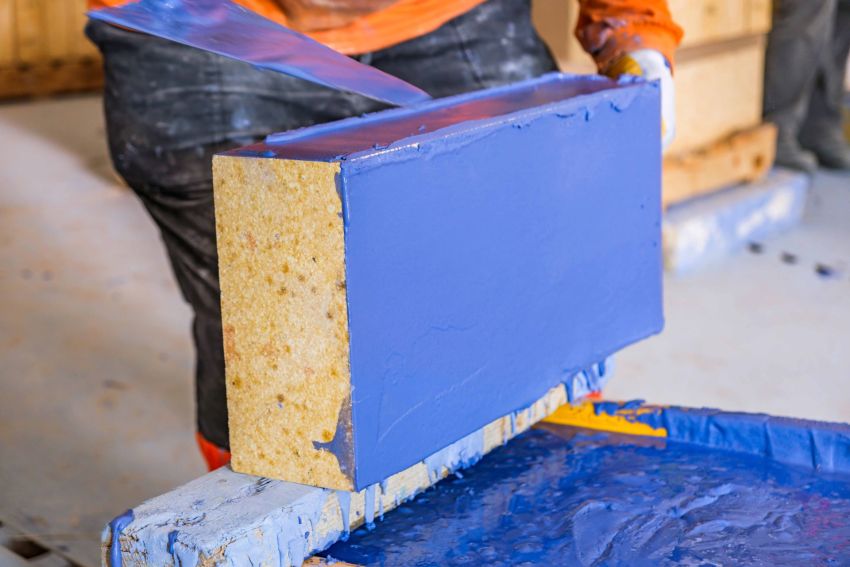
The Purpose of Refractory Brick Production
Refractory bricks are produced in the industry for two main purposes:
High Thermal Resistance – Bricks that maintain their structure even at temperatures of several thousand degrees.
Corrosion Resistance – Bricks resistant to acids, slags, and chemical effects, which are especially critical for glass furnaces.
According to these two purposes, the production methods also differ: powder process (sintering) and fusion casting (melting).
Production of Coarse- and Fine-Grained Refractory Bricks (Powder Process Method)
The traditional manufacturing method, known as the powder process, is quite similar to ceramic production.
Refractory raw materials are first passed through crushers to form coarse grains and then ground into fine powder in mills.
The mixture is refined by blending it with binding materials.
During the sintering process (around 800°C), the powdered refractory is transformed into a malleable mass.
The resulting material is then transferred into molds, compressed in high-power presses, and placed into the drying phase.
Depending on brick size, the drying process can take several weeks. The final stage is firing at high temperatures.
Refractory bricks produced with this method are typically used in applications where high thermal resistance is required.

The Cornerstone of Furnaces: How Are Refractory Bricks Produced?
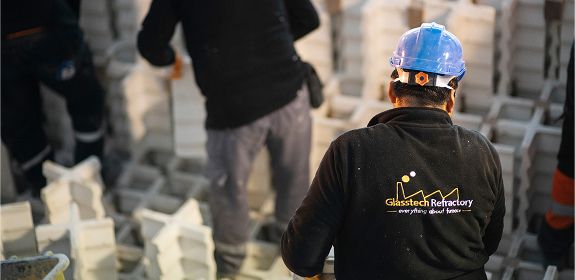
Refractory bricks are essential components used in industrial furnaces to withstand extreme temperatures and resist chemical corrosion. Their production methods vary depending on the required performance characteristics. One common method is the powder process, where raw materials are crushed, mixed with binders, pressed into molds, and fired at high temperatures to achieve strong thermal resistance. Another method is fusion casting, where refractory materials are melted in electric arc furnaces and poured into molds to produce dense blocks with high corrosion resistance. The selection of production technique depends on the operating conditions of the furnace and the level of thermal and chemical resistance required.
Production of Fused Cast Refractory Bricks (Fusion Casting Method)
The fusion casting method is used in areas where corrosion resistance is critical — particularly in glass melting furnaces.
Refractory raw materials are melted at extremely high temperatures in electric arc furnaces.
The molten material is then poured into molds made of sand or graphite.
Blocks up to one meter in length can be produced using this technique.
Bricks manufactured by this method are dense in structure and offer excellent resistance to acids and slags.
The only disadvantage is cost — fusion casting is more expensive compared to traditional methods. However, in the glass industry, where high chemical resistance is essential, it remains indispensable.