
- About Us
- Industrial Furnaces
- Services
- Client
- Contact
×
WHAT ARE YOU LOOKING FOR?
Insights, innovations, and industry developments from the world of glass furnace engineering.

The operating principles of glass furnaces vary depending on the type of furnace used. In the glass melting industry, furnaces differ according to heating technique, energy source, and heat recovery method. However, the main distinction between all furnace types lies in how they handle waste gases generated during combustion. Examples include:
Regenerative Glass Furnaces
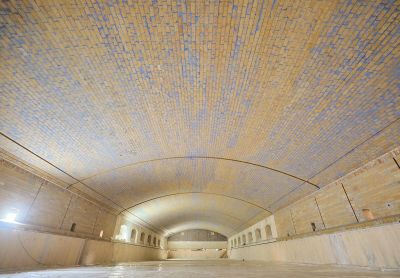
In this type, the combustion air is preheated before burning. This is achieved by passing waste gases through chambers lined with refractory materials. Regenerative furnaces operate based on the heat recovery principle. Burners are positioned inside or below the exhaust flues, and only one side of the chambers fires at a time. The flame passes through chambers previously heated by exhaust gases, reaching preheating temperatures up to 1,400°C.
There are multiple heating chambers in regenerative furnaces, and their number and arrangement create different furnace types — such as cross-fired or end-fired regenerative furnaces.
All-Electric Glass Furnaces
In these furnaces, electrodes are placed on the sides, bottom, or roof of the furnace. They are enclosed in a steel frameand coated with refractory material. Structurally, they often resemble a box. Heating occurs through resistive heatgenerated as electric current passes through the molten glass.
These furnaces produce almost no waste gas and are typically preferred for small-scale operations, since costs increase significantly with furnace size.


Glass Furnace Technologies and Operating Principles
Glass melting furnaces operate with different technologies depending on heating methods, energy sources, and heat recovery systems. Regenerative furnaces use refractory-lined chambers to recover heat from exhaust gases and preheat combustion air, reaching very high preheating temperatures. Recuperative furnaces rely on heat exchangers to continuously transfer heat from waste gases to incoming air. All-electric furnaces generate heat through electrical resistance within the molten glass and produce minimal exhaust gases, making them suitable for specific production conditions. Oxy-fuel furnaces, on the other hand, replace air with pure oxygen in the combustion process, significantly reducing flue gas volume and improving energy efficiency. Each technology offers different operational advantages depending on production scale, energy strategy, and furnace design.
Recuperative Glass Furnaces: These furnaces operate using heat exchangers, continuously preheating combustion air with waste gases. The maximum air preheating temperature is around 800°C. Burners are located on both sides of the furnace. Compared to regenerative furnaces, the melting area per unit is approximately 30% lower. They are typically used for small-scale production, though capacities of up to 400 tons per day are also achievable.
Oxy-Fuel Glass Furnaces: In this furnace type, combustion is carried out by replacing air with pure oxygen. Because nitrogen is eliminated from the combustion atmosphere, the waste gas volume is significantly reduced. This allows the furnace to retain energy longer and more efficiently. These furnaces do not require preheating or heat recovery systems, as such measures are unnecessary for their operation.