
- About Us
- Industrial Furnaces
- Services
- Client
- Contact
×
WHAT ARE YOU LOOKING FOR?
Durability Beyond 2,000°C: The Strength of Refractory Metals
What Are Refractory Metals?
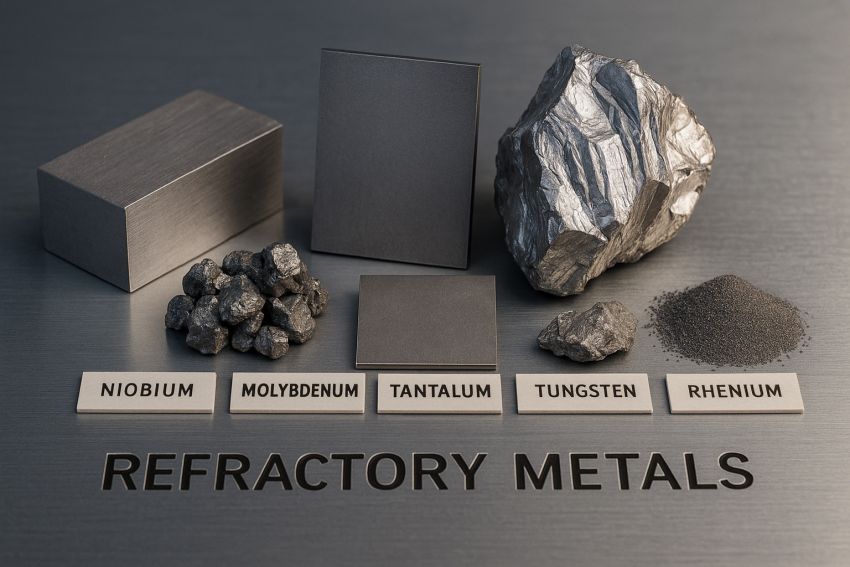
Refractory metals refer to a group of metals that exhibit exceptional resistance to high temperatures, wear, and chemical corrosion. They form one of the core foundations of metallurgical engineering and high-temperature industrial technologies.
The primary refractory metals are:
-
Niobium (Nb)
-
Molybdenum (Mo)
-
Tantalum (Ta)
-
Tungsten (W)
-
Rhenium (Re)
What these elements share in common is their melting points above 2,000 °C and their high densities, which allow them to retain heat for extended periods.
These properties make refractory metals indispensable in industries such as steel, glass, energy, and aerospace, where components must endure extreme thermal conditions.
Physical Properties
Refractory metals stand out from other metals in both thermal and chemical resistance. Among them, rhenium (Re) is particularly remarkable—its melting point exceeds 5,500 °C, making it the metal with the highest known heat resistance.
Additionally, rhenium’s hexagonal crystal structure differs from the cubic structures of other refractory metals. This unique arrangement allows it to maintain mechanical strength under intense stress without deformation.
Refractory metals also demonstrate exceptional resistance to acids, granting them a wide range of industrial applications—from lighting equipment and nuclear reactors to jet engines and industrial furnaces.

Durability Beyond 2,000°C: The Strength of Refractory Metals
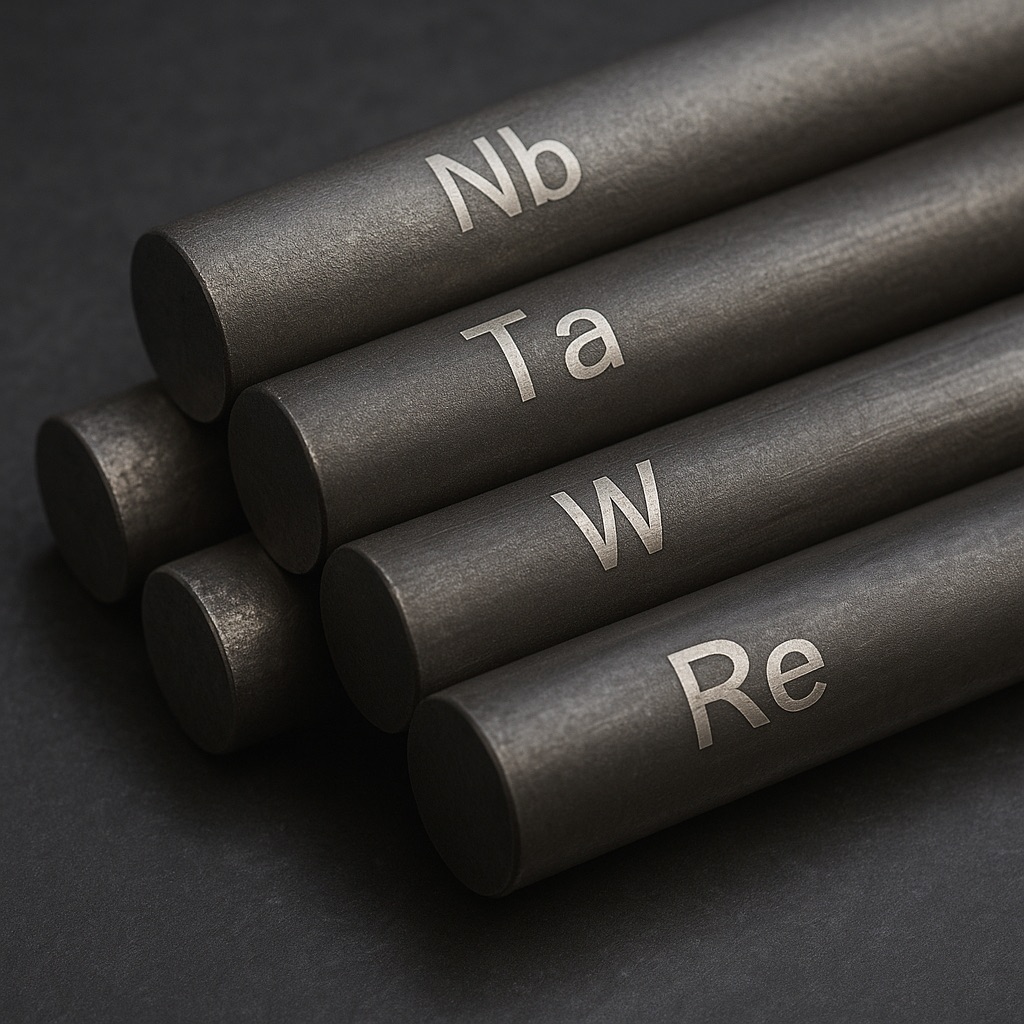
Refractory metals are a group of materials known for their exceptional resistance to extreme temperatures, wear, and chemical corrosion. Elements such as molybdenum, tungsten, niobium, tantalum, and rhenium have melting points above 2,000 °C, making them essential for industries that operate under intense thermal conditions. These metals are widely used in sectors such as metallurgy, aerospace, energy, and high-temperature industrial processes. Their ability to maintain structural strength and stability under severe heat and pressure makes them critical components in applications including furnace systems, advanced manufacturing equipment, and high-performance engineering technologies.
Types of Refractory Metals and Their Applications
Molybdenum (Mo)
Melting Point: 2,623 °C
Properties: An economical, high-strength, and machinable material.
Applications:
-
Hardening element in titanium and zirconium alloys
-
Strength enhancer in steel production
-
Commonly used in chemical process equipment due to its resistance to mercury
Tungsten (W)
Melting Point: 3,422 °C
Properties: One of the metals with the highest known melting point.
Applications:
-
Electrode material in electric arc furnaces
-
Heat-resistant wire in light bulb filaments
-
High-density alloy component in defense and ammunition industries
Niobium (Nb)
Melting Point: 2,468 °C
Properties: Known for its elastic structure and lightweight nature.
Applications:
-
Aerospace industry (rocket engines, exhaust systems, vacuum tubes)
-
Nuclear reactors and cryogenic systems
Historical Note: Approximately 89% of the Apollo spacecraft modules were made using niobium components.
Tantalum (Ta)
Melting Point: 3,017 °C
Properties: Exhibits the highest corrosion and acid resistance among refractory metals.
Applications:
-
Electronic components, especially capacitors
-
Mobile phones, computers, and medical devices
-
Chemical equipment used in acidic environments
Rhenium (Re)
Melting Point: 5,500 °C +
Properties: The rarest and one of the most recently discovered refractory metals.
Applications:
-
Jet engines, gyroscopes, and nuclear reactor components
-
Catalyst for high-temperature chemical reactions
Refractory Metals in Industrial Applications
Refractory metals are used in the most demanding engineering environments of modern industry.
Primary applications include:
-
Industrial furnace components (electrodes, coatings, heat insulation)
-
Aerospace and defense systems
-
Energy production and nuclear technologies
-
Electronics, lighting, and semiconductor manufacturing
Despite their high cost, refractory metals are favored in strategic engineering applications because of their unmatched performance and longevity, which offer substantial long-term savings.
Refractory metals push the boundaries of resistance to heat, pressure, and chemical wear.
They provide reliability and operational continuity in critical sectors such as energy, aerospace, defense, and metallurgy—and will continue to serve as strategic materials in the high-temperature technologies of the future.