
- About Us
- Industrial Furnaces
- Services
- Client
- Contact
×
WHAT ARE YOU LOOKING FOR?
Types of Industrial Furnaces: The Giant Structures at the Heart of Industry
The Importance of Industrial Furnaces
Industrial furnaces are among the most widely used systems in manufacturing. They are indispensable across various sectors for processes such as melting, firing, drying, and tempering. The melting furnaces used in glass production, the kilns in brick factories, and the rotary kilns in cement plants are some of the most common examples.
Furnaces are classified according to their operational continuity and combustion system. The most fundamental distinction is between continuous (continuous-operation) and intermittent (periodic-operation) furnaces.
Types of Intermittent (Periodic) Furnaces
Chamber Furnaces
Rectangular furnaces with flue draft from the base.
Their side walls are thick, and the outer walls are reinforced with steel frameworks.
They operate using coal, gas, or oil as fuel.
The flame moves through the chamber and circulates within the material.
Their average internal volume ranges between 80 and 150 m³.
Domed Furnaces
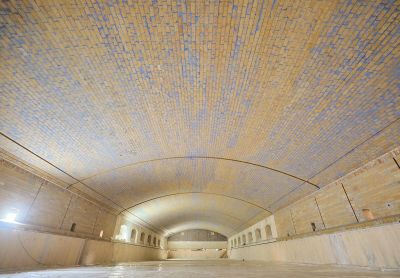
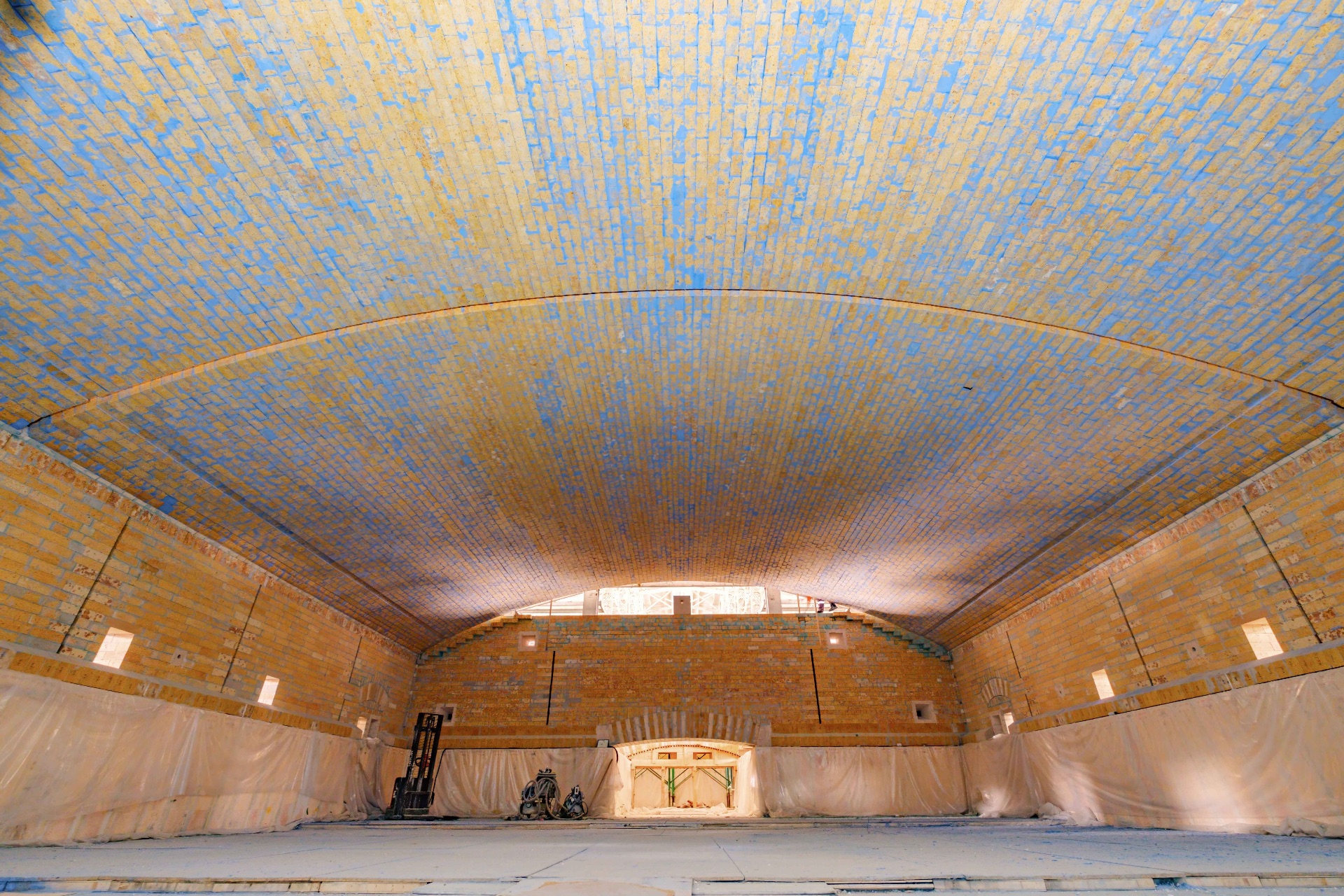
Furnaces featuring a dome-shaped upper section.
Often manufactured in two tiers, allowing for simultaneous glaze firing on the lower level and biscuit firing on the upper.
They are highly efficient in terms of heat distribution and energy use.
Bell Furnaces
Composed of two parts: a fixed base platform and a bell-shaped movable furnace that covers the platform.
This system moves on rails, allowing for significant time savings.
As soon as one firing cycle is completed, the furnace is ready for the next batch.
Types of Continuous (Continuous-Operation) Furnaces
Ring Furnaces
Constructed in circular or rectangular form.
The flame moves, while the material remains stationary.
They operate with coal or liquid fuel.
Feature a 5-meter-long flame channel and an average burning rate of 1 meter per 24 hours.
Tunnel Furnaces
In these furnaces, the flame is stationary, and the material moves.
They can have flame channels extending up to 200 meters.
Materials move through the channel on furnace cars, minimizing heat loss.
They are especially common in the porcelain and ceramics industries, where consistent temperature and energy efficiency are essential.

Types of Industrial Furnaces: The Giant Structures at the Heart of Industry
Industrial furnaces are essential systems used across many industries for processes such as melting, firing, drying, and heat treatment. Depending on their operating principles, they are generally classified as intermittent (periodic) or continuous furnaces, each designed for specific production needs. Common examples include chamber, domed, and bell furnaces in periodic operations, and ring or tunnel furnaces in continuous production systems. The efficiency and durability of these structures depend not only on furnace design but also on proper refractory materials, insulation technologies, and controlled heating procedures. Correct refractory installation, effective insulation, and disciplined operational practices play a crucial role in minimizing energy loss and ensuring long-term furnace performance.
Refractory Ceramic Fiber (RCF)
In the insulation of industrial furnaces, refractory ceramic fiber plays a vital role.
It is produced from a mixture of kaolin, alumina, and sand and has been used for over 50 years in the glass, ceramics, petrochemical, and automotive industries. RCF provides excellent high-temperature insulation and is the most common alternative to asbestos.
Disadvantage: When inhaled in powder form, RCF can be hazardous to health. Therefore, special equipment and ventilation systems are mandatory during installation.
Types of RCF:
• AES Wool (Alkaline Earth Silicate): Used up to 900 °C
• ASW (Alumino-Silicate Wool): Used above 900 °C
• PCW (Polycrystalline Wool): Suitable for temperatures of 1300 °C and above
Key Considerations in Refractory Bricklaying and Installation
Refractory Bricklaying
Defines the furnace construction process.
To prevent heat loss, no gaps should be left between bricks, and the bonding mortar must be applied evenly. Improper bricklaying can cause significant heat loss, drastically increasing the furnace’s energy consumption.
With proper bricklaying, energy loss can be reduced by up to 75%.
Refractory Installation
Covers not only the bricklaying process but also the initial heating (heat-up/atrampaj) and inspection stages.
The project design should be prepared by refractory engineers, with material specifications and brick quantities determined in advance.
During installation, close coordination between engineers and craftsmen is essential to ensure quality at every step.
The heat-up process must be performed in a controlled manner — rapid heating can cause severe damage to the entire furnace.
Industrial furnaces offer different technical features and advantages depending on their application. Whether in ceramics, glass, or cement production, the right furnace type, the appropriate refractory materials, and a professional installation process directly determine operational efficiency and furnace longevity.